Four of Our 'Cleansers' Aren't Cleansers. Korean Law Files Them Somewhere Else.
This piece was supposed to be about a new Korean labeling rule. We had it written down as a revision to the labeling standard for cleansing and hygiene products, promulgated 31 July 2026, effective at the end of December, with existing packaging usable until December 2028. Tidy. Specific. The kind of thing you can build a post around.
It doesn't exist. We went through the full revision history of the standard it was supposed to amend and found six versions, the newest from May 2025. No 2026 version, promulgated or pending. No December 2028 grace period anywhere in the text.
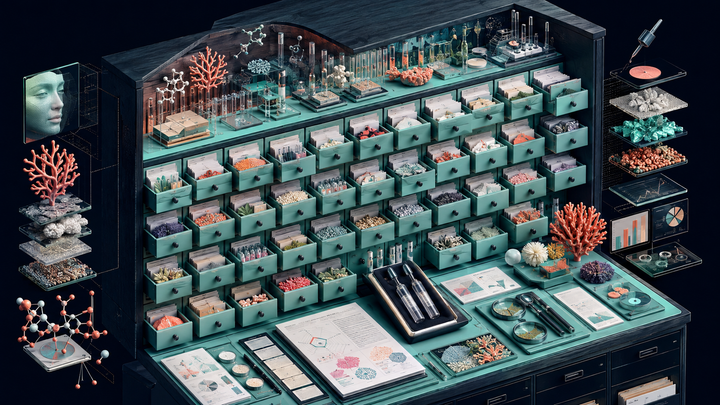
What we found instead was better, because it was about us. Our shop currently sorts 54 products into 54 different product types. Korean cosmetics law sorts every cosmetic sold in the country into 13. And when we mapped our eleven cleansing products onto those 13, four of them landed somewhere that is not the cleanser category.
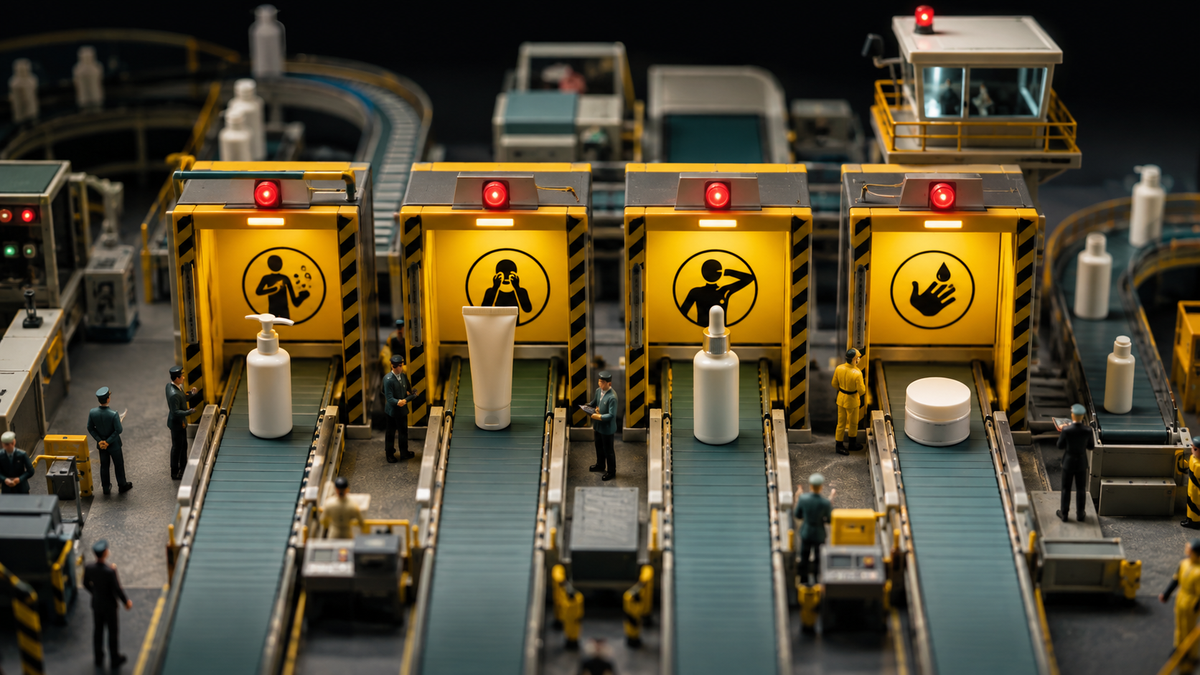
Korea splits things-that-clean across two separate statutes: 화장품법 governs anything applied to a human body, and 위생용품 관리법 governs detergents for vegetables, dishes and food-service hand wipes. Within cosmetics there are 13 types, and 인체 세정용 제품류, the cleanser bucket, names exactly seven items: foam cleanser, body cleanser, liquid soap, bar soap, intimate wash, wet wipes, and other. Cleansing water, cleansing oil and cleansing lotion are not in it. They sit in the basic-skincare bucket as makeup removers, which means the anti-acne functional claim, legally restricted to 인체 세정용 제품류, is unavailable to them no matter what they contain. Of the eleven products we file under a cleansing type, three map cleanly to the cleanser bucket, four are makeup removers, and four we could not place with confidence. One of the four unplaceable ones we can't even classify as rinse-off or leave-on, which is our problem, not the law's.
The rule we went looking for turned out not to exist
The standard we thought had been revised is 「위생용품의 표시기준」, an MFDS notice. Its complete revision history runs to six entries: the original 제2018-26호 of 16 April 2018, then 제2018-79호, 제2020-79호, 제2021-112호, 제2022-68호, and the current 제2025-34호 of 27 May 2025. That is the whole list.

The notice does contain a packaging transition clause, which is probably where ours came from. It says existing packaging for single-use panty liners and dry tissue for wet wipes could be used until 18 April 2020. Six years in the wrong direction.
Our best guess at the origin of the phantom is a translation loop. The Korea Legislation Research Institute renders 「위생용품 관리법」 in English as the Cleansing and Hygiene Products Control Act. Push "cleansing and hygiene products labeling standard" back into Korean and you get 「세정·위생용품의 표시기준」, a title that has never been issued by anybody. We had that exact string in our notes.
We are writing this down because the failure mode is worth naming. A plausible Korean regulatory title with a plausible date attached is very hard to disprove by looking at it.
Two statutes, and the line runs through the human body
위생용품 관리법 제2조 lists six categories of 위생용품. First on the list is 세척제, and the statute is unusually concrete about what that means: preparations used to wash vegetables and fruit, and preparations used to wash food containers, processing equipment and cooking utensils. Then 헹굼보조제 (rinse aids), 위생물수건, oral care items, tattoo inks, and a residual category that includes toilet paper, single-use napkins, and wet wipes packaged for hand-wiping at food-service businesses.

Nothing in 위생용품 관리법 touches a human face.
화장품법 제2조 covers the other side. A cosmetic is something applied to the human body by spreading, rubbing, spraying or similar, to clean or beautify it, or to maintain skin and hair health — and, crucially, whose action on the body is 경미한 것, slight. Medicines are excluded by proviso.
So the boundary Korea drew is not a chemical one.
A mild anionic surfactant washing a mixing bowl is a 위생용품. The same class of surfactant aimed at your back is a 화장품. Change nothing but the sentence on the label describing what it's for, and the governing statute and the labeling rules change with it.
A third door exists for anything that claims to kill things. Hand sanitiser is neither cosmetic nor hygiene product in Korea; external disinfectants built on hydrogen peroxide, isopropyl alcohol, benzalkonium chloride, cresol or ethanol are designated 의약외품 under the MFDS notice fixing the scope of quasi-drugs. We don't sell one, and now we know why the category never came up.
Where our own eleven cleansers actually land
The 13 cosmetic types no longer live where most people look for them. They used to sit in 별표 3 of the enforcement rule; the list now lives in 별표 1 of an MFDS notice on precautions and allergen labeling. Type 3 is 인체 세정용 제품류, and it names seven things: 폼 클렌저, 바디 클렌저, 액체 비누, 화장비누, 외음부 세정제, 물휴지, and a catch-all.

Cleansing water, cleansing oil, cleansing lotion and cleansing cream appear nowhere in it. They are listed under type 11, 기초화장용 제품류, grouped as 메이크업 리무버. There is a vocabulary tell here that we had never noticed: in the regulation, the word 클렌징 appears only on the makeup-remover line. In the cleanser bucket the word is 클렌저.
Mapping our eleven against those seven:
| Our product type | Product | Where Korean law puts it |
|---|---|---|
| Cleansing Foam | YBK Relief Hydration Light Foam Cleanser | 인체 세정용 — 폼 클렌저 |
| Cleansing Bar | papasoap Deep Clean Blemish-Care Bar | 인체 세정용 — 화장비누 |
| Cleansing Tissue & Pad | bellpo Rice Water Deep Cleansing Wipes | 인체 세정용 — 물휴지, with carve-outs |
| Cleansing Water | Beauty Recipe Little Mermaid Cleansing Water | 기초화장용 — 메이크업 리무버 |
| Cleansing Oil | TOMIWOLF Black Bamboo Deep Pore Cleansing Serum | 기초화장용 — 메이크업 리무버 |
| Cleansing Lotion & Cream | Nomadia Blue Calming Panthenol 1% Cleansing Milk | 기초화장용 — 메이크업 리무버 |
| Lip & Eye Remover | FRUDIA Re:proust Deep Clean Lip & Eye Remover | 기초화장용 — 메이크업 리무버 |
| Cleansing Gel | MYABIS Soft Gel Cleanser | unresolved |
| Cleansing Powder | Reve:am Enzyme Cleansing Powder | unresolved |
| Cleansing Balm | SHINGMULNARA Young Green Tea Tube Cleansing Balm | unresolved |
| Scrub & Peeling | hidiff Royal Soft Clean Kit | unresolved |
Four unresolved, and we would rather say that than guess. Powder washes and balms are named nowhere in either bucket. The balm arguably falls under 클렌징 크림 by way of the list's 등, but "arguably" is not a classification. And the hidiff kit is on our own open-issues list for a more basic reason: we have not established whether it is rinse-off or leave-on.
The bucket you land in is not cosmetic. Article 2, item 9 of the enforcement rule defines one of Korea's functional-cosmetic categories as products that help relieve acne-prone skin, followed by a single-sentence proviso: 다만, 인체 세정용 제품류로 한정한다. Limited to human-cleansing products. Our in;usth body wash sits in that bucket and its copy calls it a registered functional cleanser. A cleansing oil with identical salicylic acid content could not carry the claim in Korea, because of where it sits on a list.
The same wipe, three different laws
Wet wipes are the cleanest illustration of how arbitrary this gets, and we happen to sell the product that sits on the line. The bellpo Rice Water Deep Cleansing Wipes carry our joint-highest screening score at 9.8.
물휴지 was not always a cosmetic. It moved from the industrial-products regime into 화장품법 by way of 총리령 제1154호, promulgated and effective 2 April 2015, with the operative amendment to 별표 3 제1호다목5) deferred to 1 July 2015. The supplementary provisions are precise in a way that tells you this was a real migration: the new rule applied to wipes first imported or manufactured on or after 1 July 2015, and anyone previously registered under the 「품질경영 및 공산품안전관리법」 had until 30 June 2015 to re-register. The government's stated reason was to strengthen safety management of a product then being managed as an industrial good.
But the cosmetics type list immediately carves two things back out of 물휴지. Wipes packaged so they can be used for wiping hands at food-service businesses are excluded, and are picked up by 위생용품 관리법 instead. Wipes used at funeral homes or medical institutions to clean bodies are excluded too, and land nowhere in cosmetics at all.
Same nonwoven. Same liquid. Three legal outcomes, decided entirely by the sentence on the box describing who is going to wipe what.
What our screening found
The embarrassing number is ours, not anybody else's: 54 products, 54 distinct values in our productType field. Every single product in the shop has a category all to itself. That is not a taxonomy, it is a list of names with a schema wrapped around it, and the practical cost showed up the moment we tried to do this exercise: we cannot query our own store for "every 인체 세정용 제품류 product we sell," because the field that should answer it was built for menu navigation and nothing else. Korea manages 13 types for an entire national market. Second admission: everything in the table above is our reading of the statute, not a determination by anyone with authority to make one. We are a screening desk, not a regulator, and we marked four products unresolved rather than round them into the nearest bucket. Third: one of those four is unresolved because of a gap in our own records, not the law's — we still have not established whether the hidiff Royal Soft Clean Kit is rinse-off or leave-on, and that has been sitting on our list for a while. What the exercise did produce is a real correction. We had been treating MYABIS Soft Gel Cleanser (9.2) and bellpo Rice Water Deep Cleansing Wipes (9.8) as neighbours because both say "cleansing" on the front. Under Korean law one is a named cosmetic type with its own carve-outs and a statutory migration history, and the other we cannot place at all.
The practical takeaway
The useful habit is to ask what a product is legally for before comparing it to anything. Two bottles both marked "cleanser" can be a foam wash regulated as 인체 세정용 and a cleansing oil regulated as basic skincare. They are built for different jobs, tested against different expectations, and the second one is a makeup remover whatever the front label says. We went through when you actually need both of them in our piece on double cleansing.

There is one claim that works as a shortcut. An acne-relief claim on a Korean product is a functional-cosmetic claim, it requires registration, and it is only available to 인체 세정용 제품류. Seeing it on a cleansing oil should make you suspicious in a way that seeing it on a body wash should not. Most label claims carry less information than that one; we sorted the useful ones from the decorative ones here.
For wipes, read the intended-use line. It is the only thing separating a cosmetic from a hygiene product, and Korean packaging says it plainly because it has to.
The EU put the same line somewhere else entirely. Regulation 1223/2009 writes cleaning into the definition of a cosmetic product itself, so there is no parallel hygiene-products statute to fall out of. Korea drew the line as a border between two laws. The EU drew it inside one. Our own screening method, which currently ignores the distinction entirely, is described on our awards page.
- 「위생용품 관리법」 제2조 (시행 2026. 5. 12., 법률 제21142호). link
- 「화장품법」 제2조 (시행 2026. 4. 2., 법률 제20901호). link
- 「화장품법 시행규칙」 총리령 제1154호 (2015. 4. 2.), 부칙 제1~3조 — 물휴지의 화장품 편입. link
- 「화장품법 시행규칙」 제2조 제9호 (기능성화장품의 범위) — 여드름성 피부 완화, 인체 세정용 제품류로 한정. link
- 법제처 찾기쉬운 생활법령정보, 「화장품의 개념 및 유형」 — 13개 유형 및 인체 세정용 제품류 세부 항목. link
- 「위생용품의 표시기준」 식품의약품안전처고시 제2025-34호 및 전체 개정 이력 (6개 판, 2018–2025). link
- 「의약외품 범위 지정」 식품의약품안전처고시 제2020-48호, 제2호 바목 — 외용 소독제. link
- Regulation (EC) No 1223/2009 on cosmetic products, Art. 2(1)(a). link