 Industry
We went through all 1,920 ingredient rows looking for plastic scrub particles and found none, which is what a decade of overlapping bans in Korea, the US, the UK and the EU was supposed to produce. The five physical exfoliants we do sell are sugar, sea salt, mung bean powder, mint leaf powder and amber, and nothing in any of those rules says a natural particle has to be gentle.
Sep 7, 2026·6 min read
 Myth-Busting
The pale columns on a used nose strip are follicular casts, a normal structure that every sebaceous pore contains, not oxidised blackheads. Dermatology has been collecting them deliberately since the 1970s under a different name, and we could not find anyone who has measured how fast they come back.
Sep 7, 2026·6 min read
 By the Numbers
Nineteen of our 56 products carry a sulfate-free claim, spelled three different ways, and several of them are on things that were never going to contain a sulfate anyway. The two products in our catalogue that genuinely use one are silent, and one sulfate-free body wash foams on something spelled sodium lauryl sulfoacetate.
Sep 7, 2026·6 min read
 Routine
The research on preventing hand dermatitis was almost entirely done on nurses, factory workers and hairdressers, because frequency of washing is the exposure that drives it and those are the people who wash most. One patch-test study shows why: a single detergent exposure is still measurable ten days later.
Sep 7, 2026·6 min read
 By the Numbers
Collagen, soluble collagen, atelocollagen, desamidocollagen, procollagen, collagen amino acids and hydrolyzed collagen all appear on one ingredient list in our catalogue, spread across positions 8 to 57. Every one of those names is a legitimate INCI entry, which is exactly what makes the effect work.
Sep 7, 2026·5 min read
 Industry
Korean law already prohibits distributing or selling cosmetics tested on animals, which makes a cruelty-free sticker on a Korean product a claim about something the baseline already covers. The interesting part is the six statutory exceptions, two of which are wide enough to drive an export programme through.
Sep 7, 2026·5 min read
 Label Decoder
Eighteen of our products claim to be silicone-free and all eighteen claims check out against the ingredient lists, which is rare in our data. What none of them say is what replaced the silicone, and in our conditioner the answer is a cationic surfactant we flag and the European committee did not.
Sep 7, 2026·5 min read
 Ingredient Deep-Dive
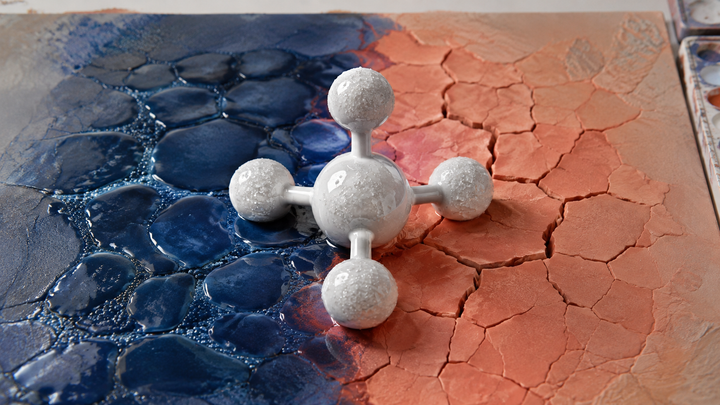
Urea holds water at low concentrations and dissolves keratin at higher ones, which makes the same INCI line describe two different products depending on a number that never appears on a label. Exactly one of our 56 products contains it, and that product also carries the only colourant in the catalogue we grade high.
Sep 7, 2026·5 min read
 Industry
The 2022 US cosmetics law created a named responsible person for every product, required facility registration and product listing, and set a 15-business-day clock on serious adverse event reports. We have never received one across 56 products, which says more about the absence of a reporting route than about the products.
Sep 7, 2026·5 min read
 Routine
Acid trials fix the concentration and the schedule in advance and then measure an endpoint, so the schedule is an input rather than a result. We went looking for a study that randomised people to different exfoliation frequencies and compared them, and did not find one.
Sep 7, 2026·5 min read
 Label Decoder
Korea recognises a fixed set of functional cosmetic categories and tone-up is not one of them, which means the biggest word on the front of a tone-up sun cushion is the only claim on it nobody had to review. The three regulated claims in our own cushion are printed nowhere, and the tone-up comes from yellow, red and black iron oxide.
Sep 7, 2026·6 min read
 Does It Work?
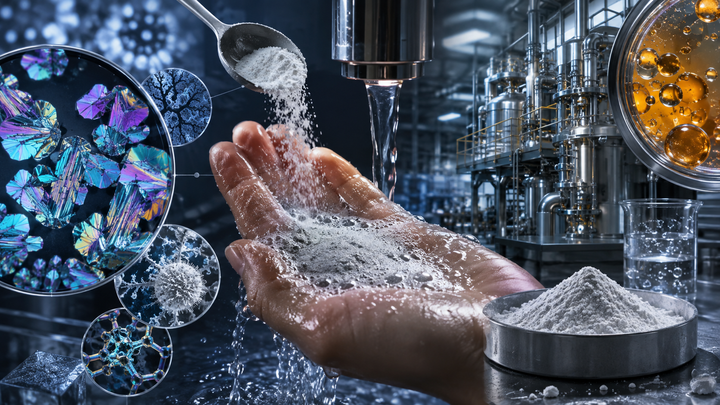
We sell one enzyme cleansing powder, and its two enzymes sit at rows eleven and twelve of nineteen. The exfoliation literature has no standardised trials, while the best-documented human data on papain comes from a 2008 FDA enforcement action and decades of factory air limits.
Sep 7, 2026·8 min read
 Myth-Busting
A federal court vacated the FDA's hypoallergenic regulation in December 1977, and 21 CFR Part 700 still has no section on the word. Two published audits and our own recount of 1,920 ingredient rows show what the label fails to predict.
Sep 7, 2026·8 min read
 By the Numbers
Nineteen of our 54 products contain niacinamide and not one of them states a concentration. We went through the Korean functional-cosmetics notice, the published trial record and our own ingredient lists to work out how much that number would tell you anyway.
Aug 15, 2026·9 min read
 Label Decoder
Non-comedogenic rests on a 1970s rabbit ear assay whose own authors said in print that it over-reacts compared to human skin. Vegan and clean rest on less than that, and one of our own seven vegan claims turned out to be wrong.
Aug 15, 2026·8 min read
 Ingredient Deep-Dive
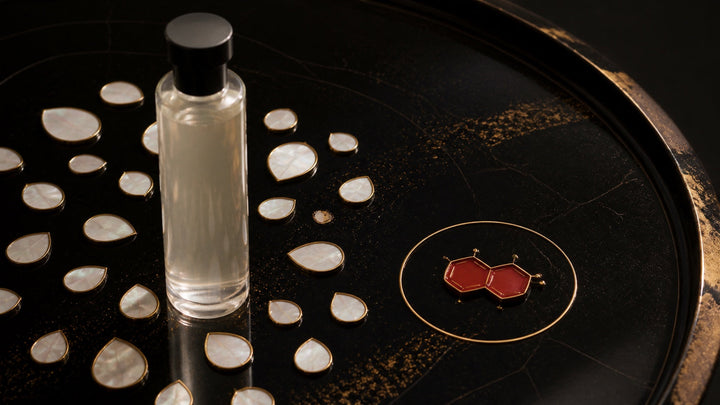
Menadione sits twentieth of thirty ingredients in a toner we score 9.5, and it is the only high-risk grade on a face product in our catalog. Here is the chemistry, the regulatory gap it falls into, and why the number did not move.
Aug 14, 2026·9 min read
 By the Numbers
We re-read all fifty-four ingredient lists and found fifteen products declaring fragrance, three more than our own notes said. Eight products carrying a fragrance-free claim contain a fragrance material we graded ourselves.
Aug 14, 2026·8 min read
 Industry
PDRN, exosomes and sponge spicules all crossed from clinics into consumer bottles in about three years. Two of them are far too large to enter intact skin, and the third works only because it makes holes.
Aug 14, 2026·8 min read
 Routine
Every SPF number on every bottle is measured at 2 mg of product per square centimetre; in the field people apply about 0.39. We weighed a stick, a mist and a cushion against that standard, and found that nobody has ever published a measurement for two of the three.
Aug 10, 2026·9 min read
 Routine
Ten of our fifty-four products contain salicylic acid, and every legal ceiling that governs it is written per product, not per person. We recounted our own catalog, found the number we had published was wrong, and went looking for what stacking actually does.
Aug 10, 2026·9 min read
 Label Decoder
Price per millilitre quietly assumes the last millilitre is worth the same as the first, and nothing in the regulations guarantees that. We ran our own shelf through the arithmetic, including the 400ml toner we sell at the worst per-millilitre rate in its category.
Aug 10, 2026·9 min read
 GDS
GDS
Eight ingredient entries in our 1,696-row screen carry our worst grade, and every one of them sits in a product we currently sell. Here are all six products by name, what each flagged ingredient is actually doing there, and the three defects we found in our own scoring while writing it.
Aug 10, 2026·10 min read
 Routine
Plain water leaves 59.3% of a waterproof sunscreen on your face, and a foaming cleanser still leaves 36.8%, so the oil step is doing real work for anyone who wears one. But the barrier-stripping mechanism everybody cites for the cost of a second cleanse did not survive the papers we read.
Aug 10, 2026·10 min read
 Label Decoder
Some label phrases were checked by a regulator against a numeric test, and most were checked by nobody. We sort the common ones into three tiers, starting with our own 206 claims.
Aug 10, 2026·8 min read


